Google PageRank: The Algorithm Used by Google Search to Rank Web Pages
Detailed guide for learning how Google's PageRank (PR) algorithm works.
Let's cut right to the chase.
If you want to rank at the top of Google today, you need backlinks.
Not just any backlinks.
You need high-authority, trusted, contextually relevant links pointing straight to your web pages.
Why?
Because of one single system:
Now, you might have heard rumors in the SEO industry claiming:
"PageRank is dead." "Google retired PageRank years ago." "Links don't matter in the age of AI."
Here's the honest truth:
That couldn't be further from reality.
While Google did remove the public Toolbar PageRank metric back in 2016, the underlying algorithm is alive, kicking, and actively sorting billions of search queries every single second.
In the words of Steven Levy in his seminal nonfiction book, In The Plex: How Google Thinks, Works, and Shapes Our Lives:
"PageRank was the spark that made Google work. It was an intellectual breakthrough that made sense of the chaos of the World Wide Web by treating links as peer-reviewed citations."
In this actionable guide, you’ll learn:
Exactly how Google PageRank works (explained in simple, plain English)
The raw math behind the algorithm broken down into painless, step-by-step examples
Verbatim claims from Google’s foundational and modern link patents
The shift from the "Random Surfer" to the "Reasonable Surfer" model
Why Topic-Sensitive PageRank and Seed Sites dictate modern rankings
How to structure your internal links to funnel maximum PageRank across your entire site
Let's get started.
What Exactly Is Google PageRank?
To understand PageRank, let's step back in time to 1996.
Two Stanford Ph.D. students named Larry Page and Sergey Brin were analyzing the early World Wide Web.
Back then, first-generation search engines like AltaVista, Lycos, and Excite were primitive.
How did they rank web pages?
Almost entirely on on-page text matching.
If a webpage repeated the keyword phrase "best running shoes" 100 times, AltaVista put it at the very top of search results.
As you can imagine, this caused a massive problem:
Spam.
Anyone could spin up a low-quality webpage, stuff thousands of invisible keywords in white text on a white background, and hijack the top spot on search engine results pages (SERPs).

Larry Page and Sergey Brin realized something profound.
Look:
In the academic world, how do you know if a scientific research paper is truly important?
Do you count how many times the paper uses the word "physics"?
Of course not.
You look at how many other academic papers cite it.
If a paper on quantum mechanics is cited by 500 other professors, it is almost certainly a groundbreaking piece of work.
Even better: if Albert Einstein cites your paper, that single citation carries infinitely more weight than 50 citations from undergraduate students.
Larry Page thought:
"What if we treat hyperlinks on the web just like academic citations?"
Every time Page A links to Page B, it isn't just a navigation shortcut.
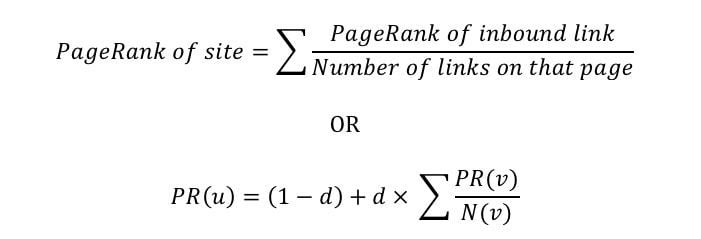
It is a measure of vote of confidence.
They named this initial research project "BackRub."
Soon after, they rebranded it to PageRank—both a play on the term "web page" and named after Larry Page himself.
The Two Core Rules of PageRank
The fundamental concept of PageRank boils down to two simple rules:
Quantity of Votes: The more web pages that link to your page, the higher your PageRank score.
Quality of Votes: A link from a page with high PageRank passes significantly more equity ("link juice") than a link from a page with low PageRank.
Think about it this way:
A link from The New York Times or Wikipedia can push a webpage straight to page one of Google.
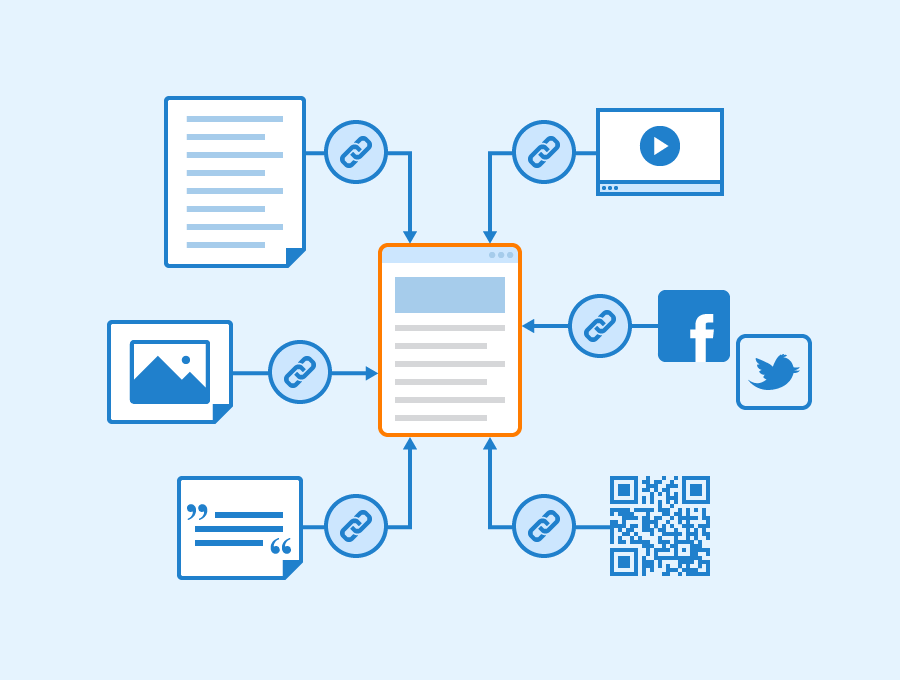
Meanwhile, a link from a brand-new blog created ten minutes ago will barely register.
As Michael Lewis famously wrote in Moneyball: The Art of Winning an Unfair Game:
"It’s about getting things down to one number. Using the stats the way we read them, we’ll find value in players that nobody else can see."
PageRank was Larry Page's way of reducing the chaotic, sprawling web into a single, reliable mathematical metric of authority.
How PageRank Is Calculated
Now.
Don't let the math intimidate you.
When people see the original PageRank formula for the first time, their eyes glaze over.
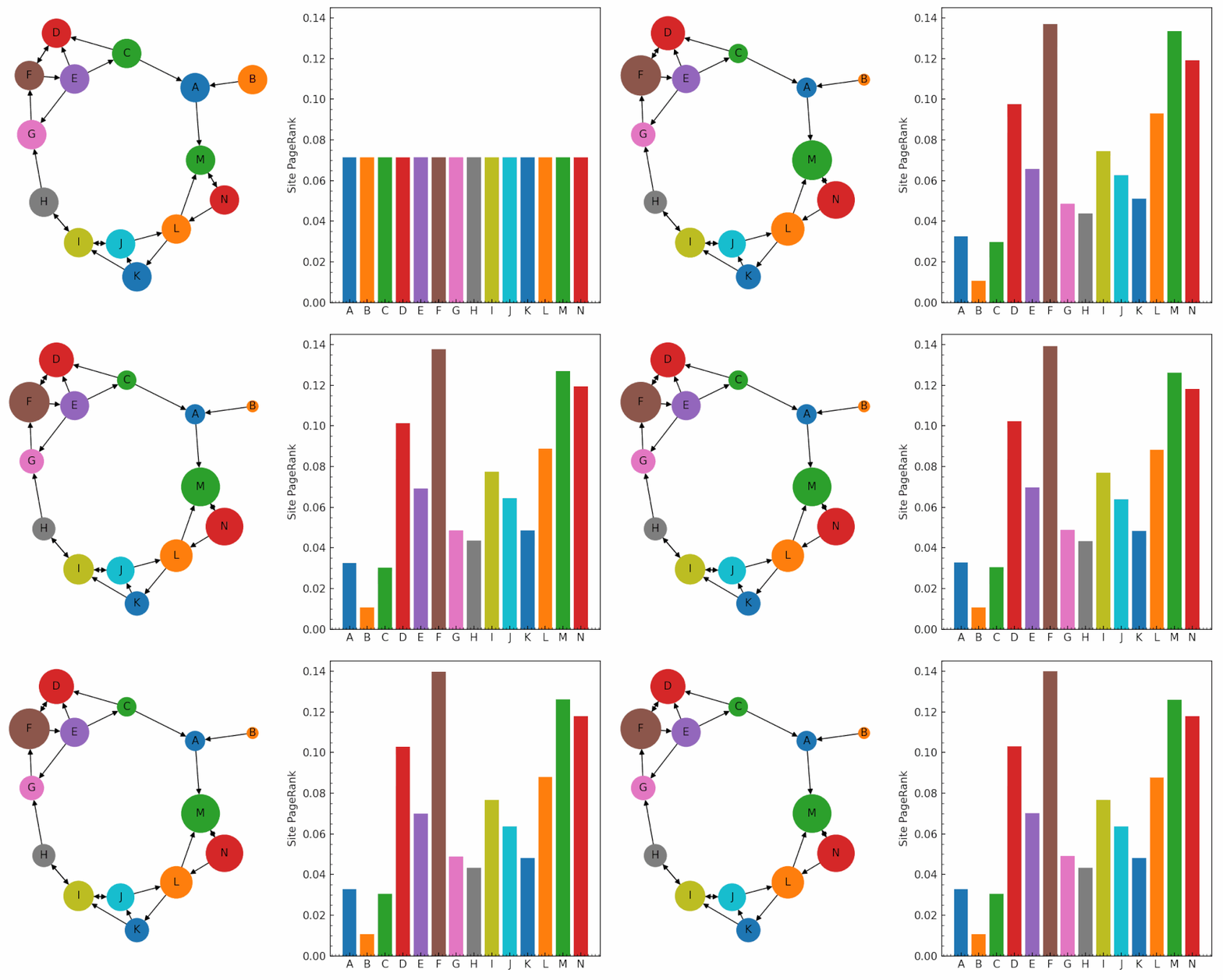
Here is what the original formula looks like:
$$PR(A) = (1 - d) + d \left( \frac{PR(T_1)}{C(T_1)} + \frac{PR(T_2)}{C(T_2)} + \dots + \frac{PR(T_n)}{C(T_n)} \right)$$
Let’s break down every variable into plain English:
PR(A): The final PageRank score of your page (Page A).
d (The Damping Factor): A probability constant, typically set to 0.85. It represents the likelihood that an imaginary web surfer continues clicking links rather than typing a brand-new URL into their browser bar.
(1 - d): The baseline PageRank that every single page automatically receives (when d = 0.85, this base value equals 0.15).
PR(T1): The PageRank score of an external page (Page T1) that links to Page A.
C(T1): The total number of outbound links pointing out of that external page (Page T1).
Why Does PageRank Divide By Outbound Links?
Notice that fraction:
$$\frac{PR(T_1)}{C(T_1)}$$
This is one of the most critical concepts in all of SEO.
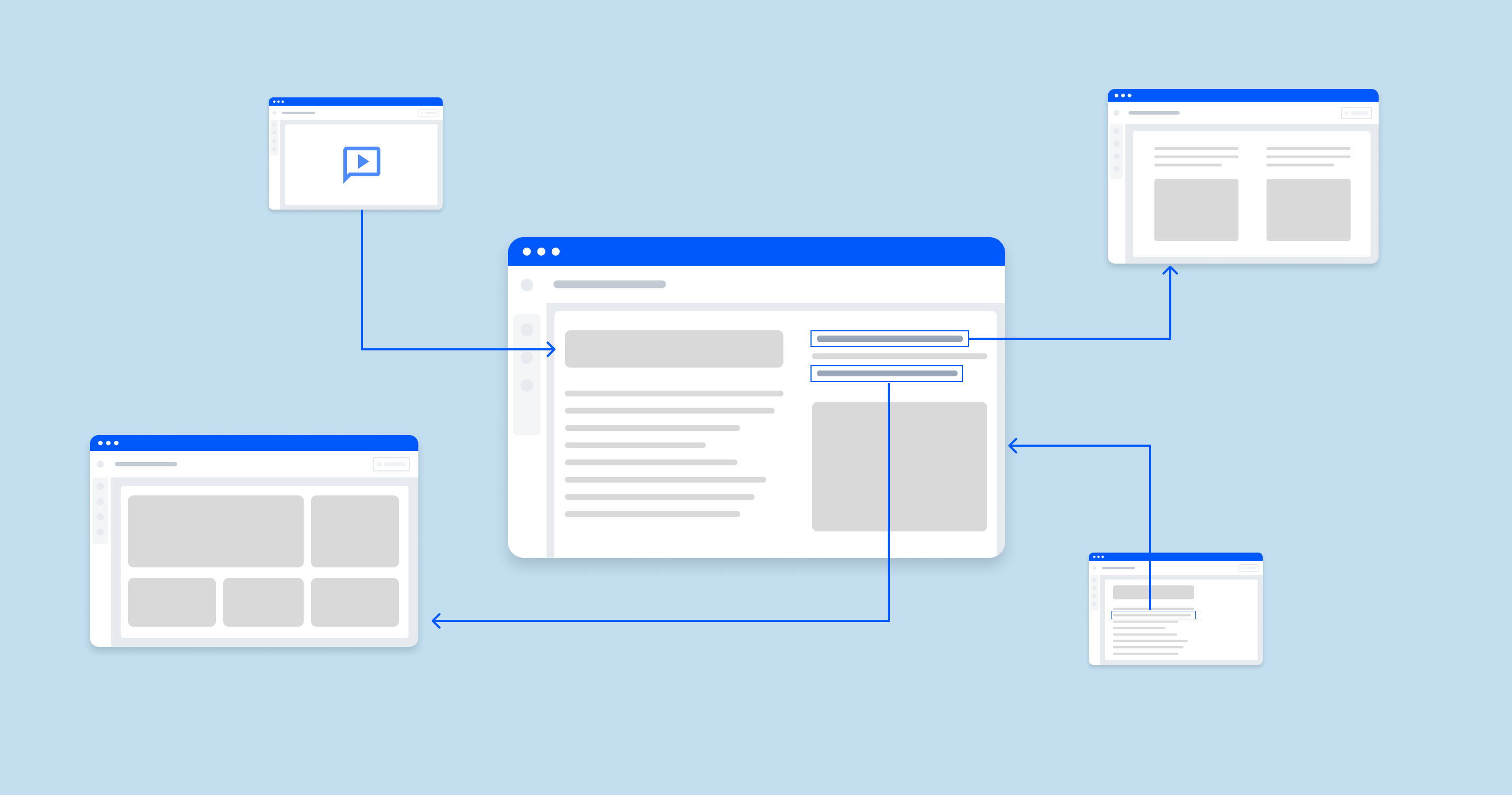
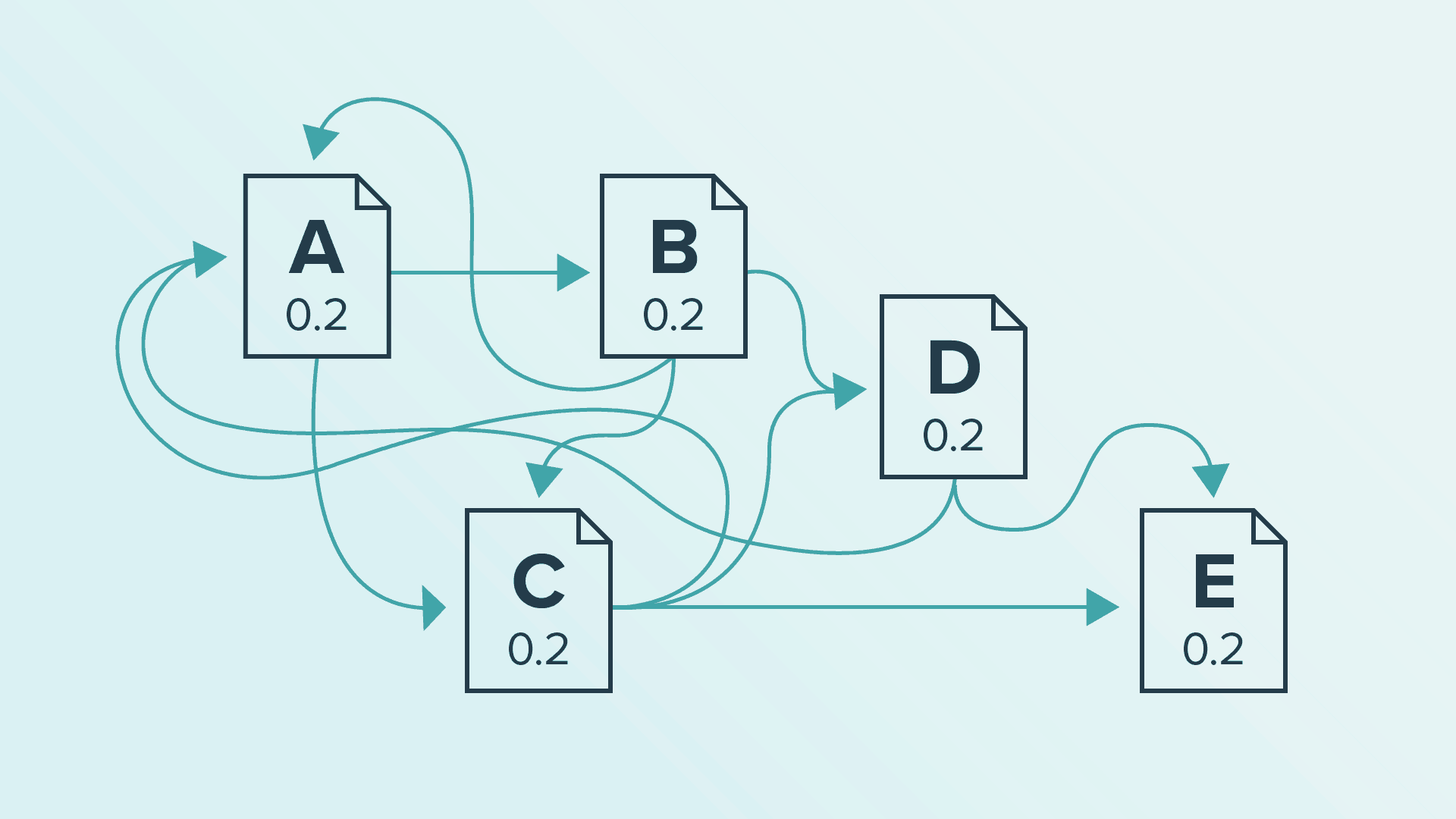
A webpage distributes its PageRank equally across all the pages it links to.
Let's look at an example:
Imagine Page X has a total transferable PageRank score of 10.
If Page X links to only 1 page (Page Y), Page Y receives the entire score of 10.
If Page X links to 10 different pages, each page receives only 1/10th of that equity (a score of 1 each).
If Page X links to 100 different pages, that equity is diluted down to a tiny trickle (0.1 each).
The takeaway?
A backlink from an authoritative domain is fantastic. But if that specific linking page links out to hundreds of other websites, the actual authority passed to your page is heavily diluted.
A Step-by-Step Calculation Example
Let’s watch how this works in practice across a mini-web of three pages: Page A, Page B, and Page C.
Here is our initial link graph:
graph LR
  B[Page B] -->|Links to| A[Page A]
  A[Page A] -->|Links to| C[Page C]
  C[Page C] -->|Links to| B[Page B]
Here is the link structure:
Page B links only to Page A.
Page A links only to Page C.
Page C links only to Page B.
We set the damping factor d = 0.85.
At the beginning (Iteration 0), every page starts with an initial baseline score of 1.0.
Iteration 1: The Initial Round
Page A receives a vote from Page B:
$$PR(A) = (1 - 0.85) + 0.85 \times \left( \frac{1.0}{1} \right) = 0.15 + 0.85 = 1.0$$
Page C receives a vote from Page A:
$$PR(C) = 0.15 + 0.85 \times \left( \frac{1.0}{1} \right) = 1.0$$
Page B receives a vote from Page C:
$$PR(B) = 0.15 + 0.85 \times \left( \frac{1.0}{1} \right) = 1.0$$
Because every page has exactly one inbound link and one outbound link, the system is in perfect equilibrium.
Iteration 2: What Happens When Page B Adds a Second Link?
Now watch what happens when the owner of Page B decides to link to Page C as well:
graph LR
  B[Page B] -->|Link 1| A[Page A]
  B[Page B] -->|Link 2| C[Page C]
  A[Page A] --> C[Page C]
  C[Page C] --> B[Page B]
Because Page B now has two outbound links, it must divide its transferable score in half:
$$\frac{PR(B)}{2} = \frac{1.0}{2} = 0.5$$
Now look at how the scores change:
Updated calculation for Page A:
$$PR(A) = 0.15 + 0.85 \times \left( \frac{1.0}{2} \right) = 0.15 + 0.85 \times 0.5 = 0.575$$
Updated calculation for Page C:
Page C now receives votes from both Page A and Page B!
$$PR(C) = 0.15 + 0.85 \times \left( \frac{PR(A)}{1} + \frac{PR(B)}{2} \right)$$
$$PR(C) = 0.15 + 0.85 \times (0.575 + 0.5) = 0.15 + 0.85 \times 1.075 = 1.06375$$
See what just happened?
Page C’s authority shot up because multiple pages point to it.
Meanwhile, Page A’s authority was cut nearly in half because its only incoming link got diluted.
Google runs these calculations across hundreds of billions of URLs repeatedly until the numbers stabilize (mathematical convergence).
The Google PageRank Paper: US Patent 6,285,999 B1
To truly understand PageRank at an elite level, you have to examine Google’s actual legal patents.
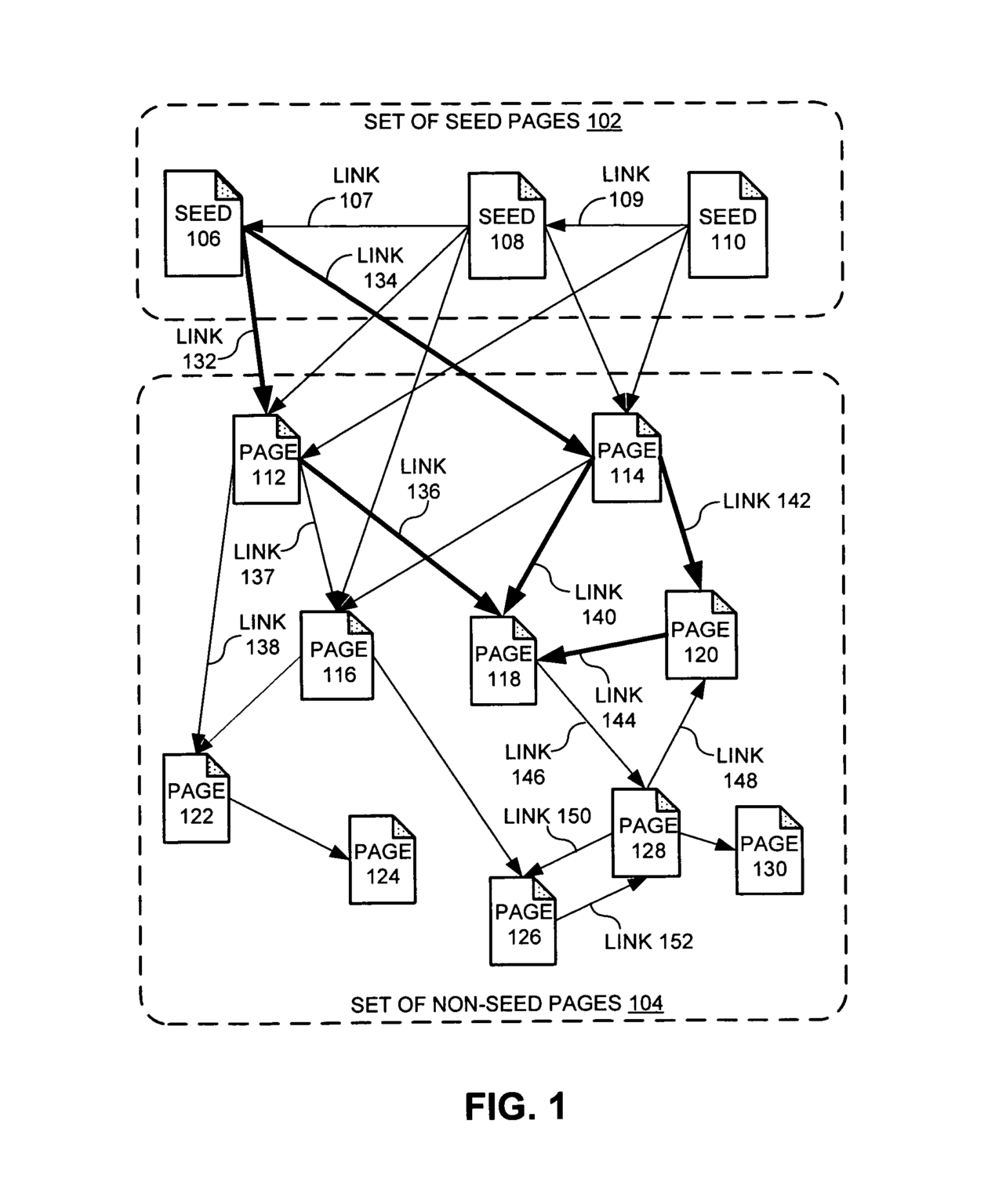
The patent that launched the modern internet is US Patent 6,285,999 B1, titled "Method for node ranking in a linked database".
It was filed on January 10, 1998, with Lawrence Page listed as the sole inventor.
Here is the exact, verbatim text of Claim 1:
US Patent 6,285,999 B1 — Claim 1:
"1. A computer implemented method of ranking a plurality of linked documents, comprising:
receiving an identification of a plurality of linked documents, the plurality of linked documents comprising a plurality of pages, each page having a plurality of out-links pointing to other pages in the plurality of pages;
determining a score for each page of the plurality of pages based on an iterative calculation, wherein the score for each page is based on the scores of the pages pointing to that page, wherein each page pointing to that page distributes its score equally among its out-links; and
ranking the plurality of pages based on the determined scores."
Why This Claim Matters
Look closely at this specific clause:
"wherein each page pointing to that page distributes its score equally among its out-links"
This confirmed what early search marketers suspected:
In the original 1998 implementation, every single link on a page carried identical mathematical weight.
If a webpage contained 4 links:
A prominent editorial link in the first sentence passed 25% of the score.
A navigational header link passed 25% of the score.
A tiny copyright link in the footer passed 25% of the score.
Keep this in mind. Because as you'll see, Google eventually realized this was a massive vulnerability and re-engineered the entire framework.
🚀 Need Serious Search Engine Authority? Partner With Rankfasta
Building high-PageRank backlinks that actually move the needle in competitive SERPs requires technical expertise, top-tier media connections, and strict algorithmic compliance.
Looking for an elite SEO and link-building partner to fix your site's PageRank distribution, eliminate link equity waste, and land authoritative editorial placements?
Hire Rankfasta today. Send an email to hello@rankfasta.com to schedule a strategic consultation.
The Golden Age and Demise of Toolbar PageRank
If you worked in SEO between 2000 and 2014, you remember the green bar: The Google PageRank Toolbar.
Google released a browser plugin for Internet Explorer that featured a visible green indicator.
When you loaded any web page, the toolbar displayed an integer from 0 to 10. It was the ultimate PageRank Checker:
| Toolbar Metric | Status | Typical Representation |
|---|---|---|
| PR 0 | Unranked / Penalty | Brand-new URL or penalized domain |
| PR 3 - 4 | Average Webmaster | Established niche blog or local business |
| PR 6 - 7 | Major Authority | Popular publications, universities, tech hubs |
| PR 9 - 10 | Web Infrastructure | Google.com, Yahoo.com, Apple.com, US White House |
The Logarithmic Reality
Toolbar PageRank was not a linear scale. It was logarithmic (widely believed to operate on a base of 4 or 5).
What does that mean in practice?
Moving a site from PR 1 to PR 2 required only a couple of basic links.
Moving from PR 4 to PR 5 required substantially more effort.
And jumping from PR 7 to PR 8 required thousands of high-tier editorial references.
graph TD
  PR1[PR 1: Minimal Effort] --> PR3[PR 3: Moderate Equity]
  PR3 --> PR5[PR 5: Established Authority]
  PR5 --> PR7[PR 7: Industry Leader]
  PR7 --> PR9[PR 9: Global Giant]
Why Google Killed the PageRank Toolbar
The Toolbar was too transparent.
Because webmasters could see the exact score of every URL on the internet, an aggressive black market emerged:
Backlinks were openly bought and sold based strictly on Toolbar PR (e.g., "$100/month for a sitewide PR5 link").
Blog comments, guestbooks, and open forums were overwhelmed by automated link spam engines like ScrapeBox.
Expired domains with historical PageRank scores were bought up in bulk to construct private blog networks (PBNs).
Google responded systematically:
In 2005, they partnered with Yahoo and MSN to introduce
rel="nofollow"to combat comment spam.They slowed down Toolbar updates from monthly exports to once or twice a year.
Finally, on March 7, 2016, Google officially turned off the public Toolbar PageRank servers forever.
Does PageRank Still Exist Behind the Scenes?
Yes. Absolutely.
Many SEOs mistakenly believe that because the metric is no longer visible, the algorithm was abandoned.
In 2017, Google Webmaster Trends Analyst Gary Illyes clarified this directly:
"DYK that after 18 years we're still using PageRank (and 100s of other signals) in ranking?"
Similarly, Google's John Mueller stated:
"PageRank is not dead. It’s a core part of how we evaluate the web, but it has evolved substantially beyond the original paper."
Let’s look at how Google modernized the algorithm.
The "Reasonable Surfer" PageRank Calculation Method
In the classic 1998 PageRank model, Google used the "Random Surfer" hypothesis.
It assumed an imaginary user lands on a page and clicks links completely at random, with every link having an identical mathematical probability of being clicked.
Think about your own browsing habits:
When you read an article, are you equally likely to click:
A relevant contextual link embedded inside the second paragraph?
A link to "Terms of Use" sitting at the bottom of the footer in 8-pixel gray text?
Obviously not.
In 2004, Google filed a patent that permanently changed link analysis: US Patent 7,716,225 B1, titled "Ranking documents based on user behavior and/or feature analysis".
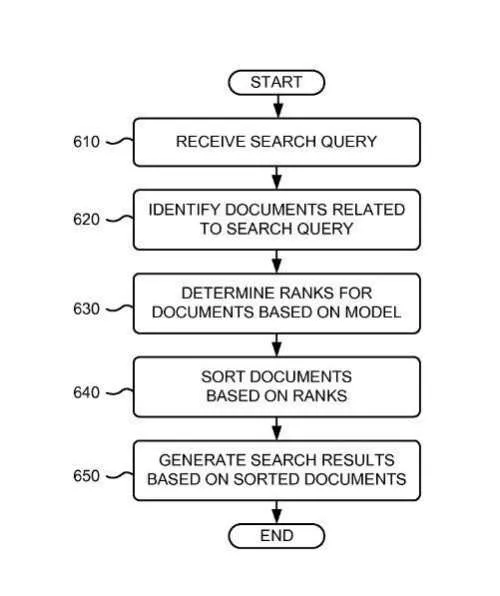
This is universally known across the SEO industry as the "Reasonable Surfer" patent.
Let’s read the exact, unedited language of Claim 1:
US Patent 7,716,225 B1 — Claim 1:
"1. A computer-implemented method comprising:
determining a probability that a user will select a link from among a plurality of links in a referencing document, the probability being based on a feature of the link;
assigning a weight to the link based on the determined probability; and
ranking a referenced document pointed to by the link based on the weight assigned to the link."
Read that again.
Google determines the probability that a real human will click a link based on its features, and weights the transferred PageRank accordingly.
How Page Elements Are Weighted Under Reasonable Surfer
graph TD
  subgraph Webpage Layout & Equity Distribution
    NAV[Header & Navigation: Moderate Utility Weight]
    BODY1[Upper Editorial Paragraph Link: MAXIMUM WEIGHT]
    BODY2[Mid-Article Contextual Resource: HIGH WEIGHT]
    SIDE[Sidebar Banner / Widget Link: LOW WEIGHT]
    FOOT[Footer Disclaimer / Copyright: NEAR-ZERO WEIGHT]
  end
Here are the specific features evaluated in the patent:
Position on the page: Links placed in the main editorial body pass far more equity than links tucked into footers, sidebars, or author profile boxes.
Visual prominence: Links rendered in larger fonts, bold weights, or contrasting colors have a higher click probability and pass more value.
Anchor text relevancy: Descriptive anchor text that flows naturally within a sentence passes more weight than generic text like "read more" or "click here."
Commercial appearance: Links formatted to look like display banner ads, affiliate buttons, or paid sponsorships have their weight discounted.
This fundamentally shifted SEO: A link is no longer just a link. A single contextual link inside an editorial article can pass 10x more PageRank than a sitewide footer link from that same website.
Topic-Sensitive PageRank and Seed Sites
Under the original 1998 algorithm, authority was broad: a backlink from a massive sports news website could theoretically boost your ranking for "enterprise database software."
In modern search, that is no longer true.
Enter Topic-Sensitive PageRank and Seed Sites.
1. Topic-Sensitive PageRank (US Patent 7,512,608 B1)
Developed by Taher Haveliwala at Stanford and incorporated into Google's core infrastructure via US Patent 7,512,608 B1 ("Methods and apparatus for topic-sensitive PageRank"), this system calculates authority across discrete subject-matter categories.
Here is the exact claim:
US Patent 7,512,608 B1 — Claim 1:
"1. A method of computing a document ranking, the method comprising:
identifying a plurality of document categories;
for each of the plurality of document categories, calculating an importance score for a plurality of documents in a document collection, where calculating the importance score for a document in a document category is based on links between the document and other documents in the document collection, and on a degree to which the other documents are associated with the document category;
receiving a search query; and
computing a rank for a document in the document collection based on the search query and the importance scores calculated for the document for the plurality of document categories."
In plain English:
Google doesn't maintain just one universal PageRank score for your website.
They calculate your PageRank across multiple topical classifications (e.g., Health, Technology, Finance, Travel).
If you run a cybersecurity blog and earn backlinks from Wired, Ars Technica, and GitHub, your Technology PageRank surges.
If you suddenly publish an article reviewing "the best kitchen blenders," your tech authority won't carry over. You have virtually zero Culinary PageRank.
2. Combating Web Spam with Seed Sites (US Patent 7,346,839 B2)
To neutralize private blog networks, link farms, and automated link schemes, Google introduced a graph-distance metric outlined in US Patent 7,346,839 B2, titled "Combating web spam with link analysis":
US Patent 7,346,839 B2 — Claim 1:
"1. A computer-implemented method comprising:
selecting a seed set of documents that are determined to have a low probability of being spam documents;
calculating trust scores for a plurality of linked documents in a collection based on a distance of each document in the collection from the seed set of documents in a link graph; and
utilizing the trust scores to rank search results."
How does this work in practice?
Google engineers curate a trusted "Seed Set" of websites with impeccable editorial standards (e.g., .edu domains, major news institutions, Wikipedia, government registries).
If a seed site links directly to you, your site is 1 hop away (maximum trust).
If that site links to an intermediary, which then links to you, you are 2 hops away (high trust).
If your site is 5 or 6 hops away from the nearest seed site, your algorithmic trust score drops near zero.
As Tim Wu observed in his nonfiction book The Master Switch: The Rise and Fall of Information Empires:
"The power to decide what is found is the power to decide what exists."
By gating PageRank through trusted seed sites, Google successfully rendered isolated, artificial link networks powerless.
The Nofollow Evolution and the "PageRank Sculpting" Myth
During the late 2000s, webmasters discovered an optimization tactic known as PageRank Sculpting.
Here’s how it worked:
In the original formula, outbound PageRank is divided equally among all links on a page.
Suppose a page had 10 units of PageRank and linked to 5 pages:
4 commercial pages
1 link to an administrative "Privacy Policy" page
Webmasters didn't want to waste 20% of their equity on a page that didn't generate revenue.
So they added rel="nofollow" to the Privacy Policy link.
Under the pre-2009 formula:
$$\text{PageRank Per Link} = \frac{\text{Total Equity}}{\text{Number of Dofollow Links}}$$
By adding nofollow to 4 out of 5 links, webmasters channeled 100% of the PageRank into that single dofollow link!
graph LR
  subgraph Pre-2009 Loophole
    P1[Page A: 10 PR] -->|Dofollow| T1[Target Page: Receives 10 PR]
    P1 -.->|Nofollow| D1[Ignored]
    P1 -.->|Nofollow| D2[Ignored]
  end
The Matt Cutts Clarification (The Rules Changed)
In 2009, Matt Cutts (then head of Google's Webspam team) revealed that Google had closed this loophole.
Under the modern implementation:
If a page contains 5 outbound links, the equity is always divided by 5.
If 4 of those links have a nofollow tag, those 4 portions of PageRank simply vanish into thin air.
graph LR
  subgraph Modern System
    P2[Page A: 10 PR] -->|Dofollow| T2[Target Page: Receives 2 PR]
    P2 -.->|Nofollow| V1[2 PR Vanishes]
    P2 -.->|Nofollow| V2[2 PR Vanishes]
    P2 -.->|Nofollow| V3[2 PR Vanishes]
    P2 -.->|Nofollow| V4[2 PR Vanishes]
  end
The takeaway?
Using nofollow on internal links does not channel more authority to your target pages. It simply destroys internal equity.
Keep your internal site links standard and dofollow.
How to Optimize Your PageRank in Modern SEO (Step-by-Step)
Now that you understand the mathematical mechanics and Google's patent history, let’s translate theory into rankings.
Here is a 4-step framework to maximize your site's PageRank distribution:
Step #1: Flatten Your Site Architecture (The 3-Click Rule)
One of the most frequent technical mistakes on large websites is burying high-value landing pages deep inside sub-directories.
Every click away from the homepage dilutes PageRank.
graph TD
  subgraph Deep Architecture: Equity Diluted
    H1[Homepage: PR 8] --> B1[Blog: PR 5]
    B1 --> Y1[Archive: PR 3]
    Y1 --> C1[Category: PR 1.5]
    C1 --> T1[Target Page: PR 0.2 - Starved!]
  end
graph TD
  subgraph Flat Architecture: High Equity Retained
    H2[Homepage: PR 8] --> C2[Category Hub: PR 5.5]
    C2 --> T2[Target Page: PR 4.0 - Strong Authority!]
  end
Action Item: Ensure every primary service page, commercial product page, and high-value resource can be reached within 3 clicks or fewer from your homepage.
Step #2: Deploy the "Reverse Silo" Internal Linking Strategy
Most webmasters only link downwards: from the homepage down to blog posts.
A true PageRank strategy works in reverse:
Use an SEO crawler or backlink analyzer to identify your blog posts with the highest volume of external backlinks.
Open those high-equity articles and locate relevant sentences within the first three paragraphs.
Add a prominent, contextual internal link pointing directly to your primary commercial landing page.
Because of the Reasonable Surfer model, placing links high up in the editorial body channels maximum equity directly into your revenue-producing assets.
Step #3: Eliminate Dangling Nodes and Dead Ends
In PageRank mathematics, a dangling node is any URL that receives link equity but has zero outbound links.
Common culprits include:
Unlinked PDF documents
Broken 404 pages that still have active backlinks pointing to them
Isolated landing pages stripped of site navigation
When PageRank hits a dangling node, that equity stops completely. It cannot recirculate through the rest of your website.
Action Item:
Run a broken link audit to find all 404 URLs receiving external backlinks.
Implement permanent 301 redirects from those dead URLs to the most contextually relevant live page on your domain.
You instantly reclaim lost link equity and reintroduce it into your site graph.
Step #4: Earn Contextual Backlinks from Thematic Seed Sites
Forget low-cost automated directory links and generic guest posts on multi-topic lifestyle blogs.
Remember Topic-Sensitive PageRank:
You want links from domains that Google already associates with your exact industry.
If you operate a B2B SaaS platform:
A link from a niche software review portal or an engineering blog passes massive topic-specific authority.
An editorial mention inside an established trade publication passes both raw equity and seed-level trust.
As Sean Parker memorably declared in The Social Network (2010):
"A million dollars isn't cool. You know what's cool? A billion dollars."
In modern link building:
A thousand low-quality, random links aren't cool.
What's cool?
Ten topically relevant, seed-adjacent editorial links that Google's algorithm respects unconditionally.
The Future of PageRank and AI Search
With the rollout of AI Overviews, Gemini, and search engines powered by large language models, marketers often ask:
"Will AI make PageRank obsolete?"
Here's why PageRank will remain indispensable:
Large language models can summarize information, but they struggle with a fundamental weakness: hallucinations and verification.
When an AI system needs to determine which sources are factual, reliable, and trustworthy enough to cite in an answer box, what does it consult?
The underlying link graph.
Backlinks remain the web's most computationally expensive, tamper-resistant signal of human trust.
Anyone can use generative AI to produce 10,000 blog posts in an afternoon.
What you cannot fake is getting thousands of independent, reputable websites to voluntarily link to your content as a primary source.
PageRank isn't merely Google's past.
It is the foundational filter that protects modern search from drowning in unverified, machine-generated content.
The Search Algorithm That Built Google's Empire
PageRank transformed Google from a Stanford dormitory experiment into one of the most valuable corporations on Earth.
While the user interface has changed:
The public Toolbar was retired.
The Reasonable Surfer replaced the Random Surfer.
Topical classifications and Seed Sets refined algorithmic trust.
The fundamental rule governing search visibility remains identical:
Links represent authority. Authority drives rankings.
If you understand how PageRank functions, optimize your internal link architecture, and earn backlinks from verified industry authorities, you will consistently outperform the competition.
Ready to Scale Your Search Engine Authority?
Building authoritative link profiles that survive algorithmic shifts requires deep technical precision, proven digital PR strategies, and high-level execution.
If you are ready to eliminate internal equity leaks, outrank your competition, and secure high-impact editorial backlinks:
Hire Rankfasta today.
Send an email to hello@rankfasta.com with details about your website. The Rankfasta team will analyze your backlink profile and prepare a customized PageRank and organic growth strategy for your brand.


